
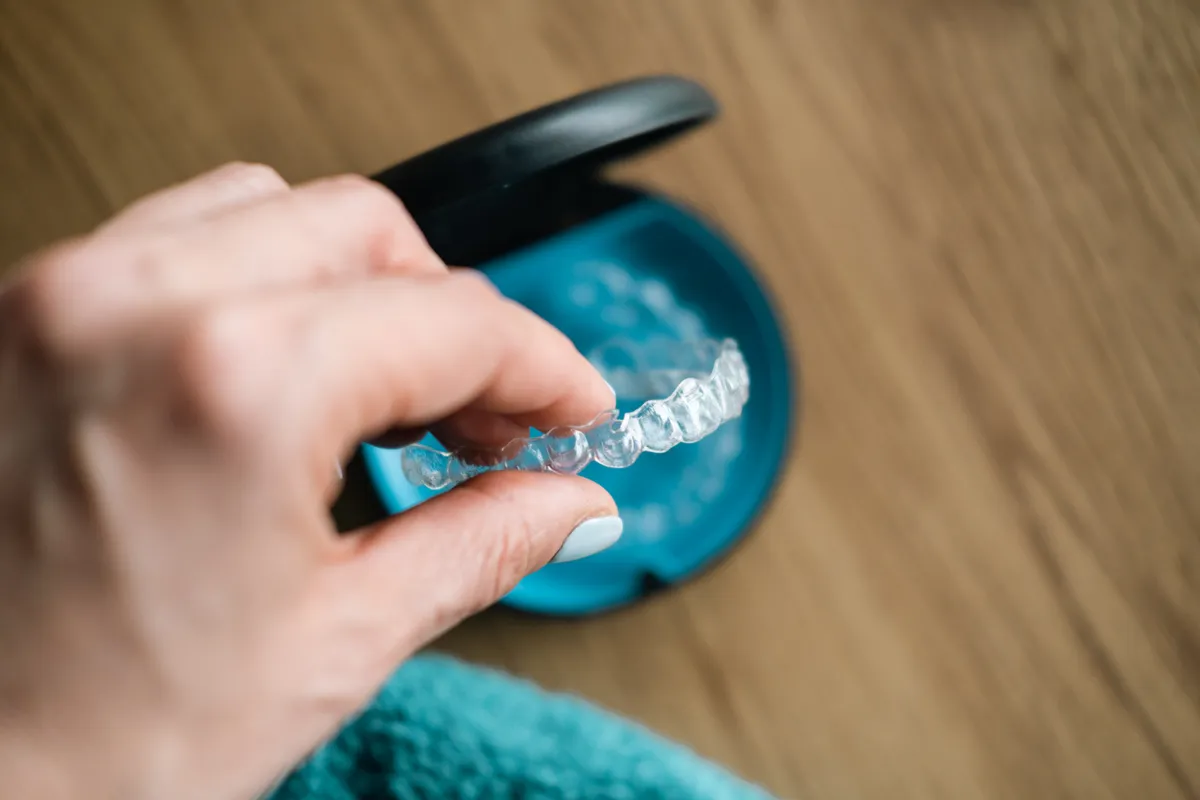
You've Almost Finished Your Invisalign Treatment - What's Next?
It's important to remember, before entering Invisalign® treatment, that misalignments are unique to the individual. Treatment length varies - some people only need their aligners to create a great result over 12 months, others with more complex issues may need attachments and a longer course.
Regardless of how your treatment has gone, what happens next should generally look similar.
Your Satisfaction and Your Orthodontist's Assessment
The first and most important check at the end of treatment is whether you - and your orthodontist - are happy with the result. The path your teeth take is mapped out before treatment begins, but sometimes teeth need a small refinement at the end. This is the stage to raise any concerns; extra aligners (refinements) are often used to tidy up a few last areas.
Thorough Cleaning
Once you and your orthodontist are happy with the position of your teeth, any composite attachments used through treatment are removed and your teeth are polished. A great tip is to book a hygiene appointment at this point too - a proper clean and polish makes your newly-positioned teeth feel beautifully fresh.
Enhancing Your Smile
Once your teeth are cleaned and polished, many patients ask about enhancements such as whitening, composite bonding, veneers or implants. Composite bonding can be used to correct chipped or worn edges. If veneers or crowns are part of the plan, those typically come before whitening. Whitening is normally the final step, finishing off the newly straightened, polished smile.
Your Retainers
At this stage you'll have another scan with the iTero scanner to create your retainers. There are several types - fixed and removable - and we typically recommend wearing your retainer regularly (often nightly) for the long term. Retention is the single most important factor in keeping the result you've worked for.
If you go a long time without wearing a removable retainer, it may not fit well later - which can mean a fresh round of treatment, costly and time-consuming. If you'd struggle to remember nightly wear, we may discuss a fixed retainer - a thin metal wire bonded behind the front 6 teeth. Fixed retainers are easier to forget about but harder to clean, so more frequent hygiene visits are advised.
Long-Term Adjustments and Benefits
Towards the end of treatment your orthodontist will discuss these next steps and plan accordingly. Beyond the aesthetic benefits, well-aligned teeth are easier to clean (reducing cavities and gum disease), and a well-balanced bite can ease jaw pain and headaches.
Looking for Invisalign in Sandbach?
At Cheshire Orthodontics our team of Specialist Orthodontists works hard to provide thoughtful, specialist-led care - whether you're considering Invisalign® for yourself or your child.
Contact us today to book a consultation with a Specialist Orthodontist in Sandbach.